

Maple Syrup: What It Is and How It’s Made
Maple syrup is one of those foods that feels simple at the table but has a lot going on behind it. It starts as sap inside certain maple trees, then becomes a sweet syrup through careful collection, boiling, filtering, and grading.
If you have ever wondered where that rich flavor comes from, why it is seasonal, or what the labels on a bottle really mean, this guide covers the basics in plain language. You will also see how Canadian maple syrup production works, how the process has changed over time, and why timing, weather, and tree species all matter.
For a closer look at production, grades, and regional traditions, explore this Canadian maple syrup guide.
Key Takeaways
- Maple syrup is made by collecting and concentrating sap from maple trees.
- It takes about 40 gallons of sap to make 1 gallon of syrup, although the exact ratio changes with the sugar content of the sap.
- Sugar maple, black maple, and red maple are among the main trees used for syrup production.
- Canada is the world’s leading maple syrup producer, with Québec producing the largest share.
- Canada Grade A syrup is sold in four color classes: Golden, Amber, Dark, and Very Dark.
- Very Dark, Strong Taste has the most intense flavor among the current Grade A categories.
- Pure maple syrup has one ingredient: maple syrup.
- Pancake syrup is usually a flavored syrup or blend, not pure maple syrup.
- Pure maple syrup is an added sugar. It contains trace minerals and plant compounds, but it is not a replacement for a balanced diet.
- Refrigerate maple syrup after opening and discard it if you see mold.
What Maple Syrup Is
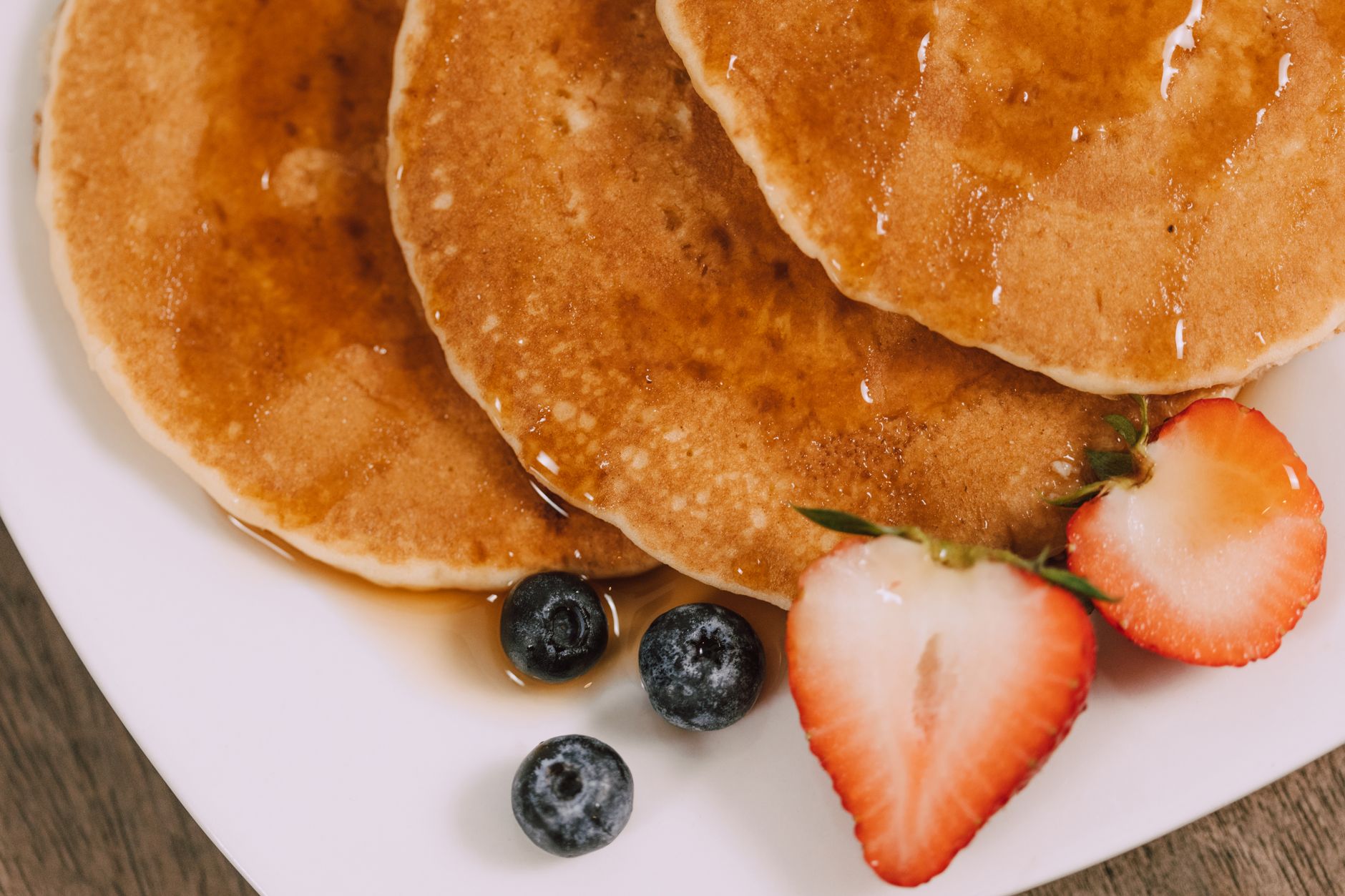
Maple syrup is a sweet syrup made by concentrating maple sap. Sap is the watery liquid that moves through a tree in spring, and it contains natural sugars, mainly sucrose, along with water and trace compounds that give maple syrup its flavor.
Fresh sap is thin and only mildly sweet. Finished syrup is much denser because most of the water has been removed through heating. That concentration is what transforms a clear, faintly sweet liquid into the familiar amber syrup people pour on pancakes, use in baking, or add to sauces.
In simple terms, sap is the starting material; syrup is the finished food. The difference is not just sweetness, but texture, color, aroma, and shelf stability.
For more information about what maple syrup contains, see our guide to maple syrup nutrition.
Where Maple Syrup Comes From

Photo by Matt Barnard via Pexels.
The best-known syrup comes from the sugar maple, with black maple also playing a role in some regions. Red maple can also be tapped, especially in areas where it grows.
These trees grow across eastern Canada and the northeastern United States, where climate and forest conditions support sap flow in late winter and early spring.
Maple stands used for syrup are often called a sugar bush, especially when the trees are managed for sap collection. Not every maple gives the same result. Sugar content can vary by species, soil type, weather conditions, and even the individual tree.
That is one reason producers pay close attention to where trees grow and how the season develops. In practice, the source of the sap shapes both sap yield and flavor.
How Maple Syrup Is Made
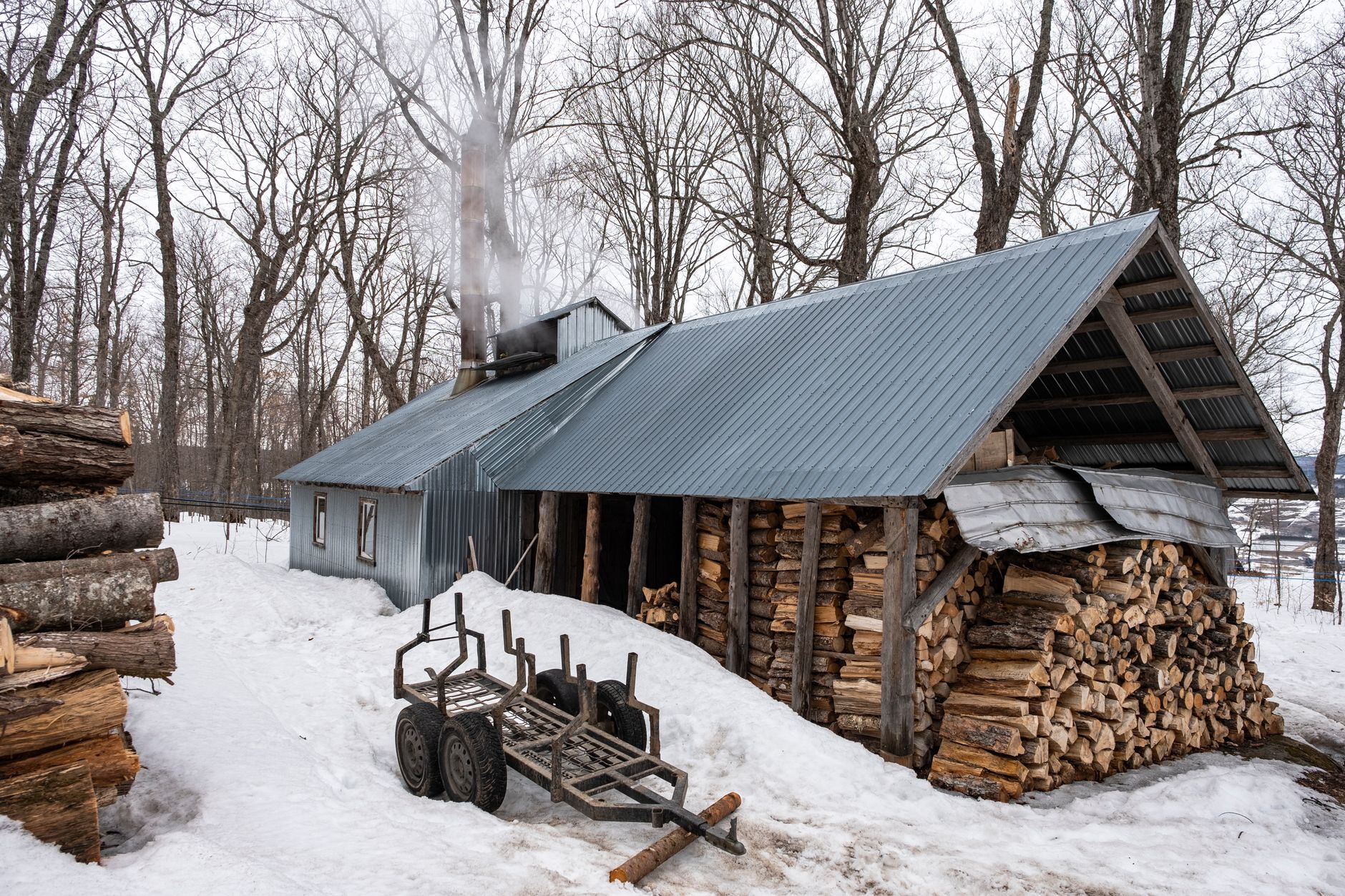
Photo by Felix-Antoine Coutu via Pexels.
Making maple syrup begins with a tapped tree. Producers drill a small taphole into the trunk and insert a spout so sap can flow into a bucket or, more commonly today, into plastic tubing.
The sap runs when nights are cold and daytime temperatures rise above freezing, especially during the spring thaw. That freeze-and-thaw pattern creates pressure changes inside the tree and helps move sap toward the tap.
Once collected, the sap is transported to a sugar shack or sugarhouse for processing. There, it is heated to remove water and turn it into syrup. Because sap is mostly water, many litres are needed to make one litre of finished syrup.
For a step-by-step look at the process, read how to make maple syrup.
From Tapping to Collection
The first step is small but important: drilling the taphole at the right time and in the right place. A healthy maple tree can support tapping for years when the work is done carefully.
Traditional collection used metal buckets hanging from spouts, while modern operations often rely on tubing that carries sap downhill to a central tank. Tubing can reduce handling and make large-scale collection more efficient.
The season is still controlled by nature, though. Cold nights keep the sap moving, and warmer days help it flow. When temperatures stay too warm, the run slows down, which is why the timing of the season matters so much.
Boiling and Filtering the Sap
After collection, the sap is boiled to evaporate water and concentrate the sugars. This is the stage where the liquid changes from something very mild to sweet syrup made for eating.
Producers watch the boiling closely because the point is not just to heat it, but to reduce it to the right density and consistency. Once the syrup is ready, it is filtered to remove fine mineral crystals known as sugar sand.
Filtering helps create a smoother final product and cleaner appearance. Although the equipment may vary from one operation to another, the basic sequence remains the same: collect, heat, reduce, filter, and finish.
Why Timing and Weather Matter
Maple syrup season is short because it depends on weather conditions that only happen for part of the year. In many places, the season begins in late winter and continues into early spring, ending when trees begin to bud.
Once buds open, the sap changes and production quality can drop. Warm spells may bring a strong run at first, but if the weather turns too mild, the flow can fade quickly.
That is why syrup makers follow the forecast so closely. The season is seasonal by nature, and the weather does not just affect quantity; it can also influence color and flavor from one batch to the next.
Maple Syrup Grades
Grades exist so buyers can compare maple syrup consistently. In Canada, the common label is Canada Grade A, which groups syrup by color and flavor characteristics.
The current Canadian Grade A color classes are:
- Golden, Delicate Taste
- Amber, Rich Taste
- Dark, Robust Taste
- Very Dark, Strong Taste
In general, lighter syrup is milder, while darker syrup has a stronger maple taste. The shift in color does not automatically mean one syrup is better than another; it simply reflects differences in season, processing, and natural variation.
Producers and inspectors also look for clarity and the absence of off-flavor. Canadian grading rules are overseen within the food inspection system, including the Canadian Food Inspection Agency, so the labels are intended to be practical for shoppers as well as fair for producers.
For help choosing a syrup by color, taste, and use, read our guide to the best maple syrup.
How Color Relates to Flavor
Color is one of the easiest ways to understand flavor intensity. Syrup made earlier in the season is often lighter, with a delicate, less intense taste.
Later in the season, syrup may become darker and more robust. Many people choose lighter syrup for foods where they want a subtle maple note, such as yogurt or fruit, while darker syrup can stand up well in baking, glazes, and marinades.
The key point is that color tells you something useful about the taste experience. It is a shopping clue, not a quality score by itself.
What Labels and Standards Mean
In Canada and the United States, grading systems are meant to help consumers understand what they are buying. While the exact terms can differ, the principle is the same: a consistent label makes it easier to compare products.
Standards look at color, clarity, and whether the syrup has any undesirable flavors. For everyday shoppers, that means a bottle marked clearly by grade should give a reliable sense of what the syrup will taste like.
If you are trying maple syrup for the first time, those labels can help you choose between a gentle, lighter style and a deeper, more pronounced one.
For product-focused quality information, see Maple Syrup Elixir Lab Results.
How to Choose Maple Syrup for a Recipe
Use these steps to choose a maple syrup that fits your recipe:
Step 1: Check the Product Name
Look for pure maple syrup rather than pancake syrup, table syrup, or maple-flavored syrup. A bottle of pure maple syrup should identify maple syrup as the product and list no added sweeteners in the ingredient list.
Step 2: Choose a Color Class
Choose Golden or Amber when you want a lighter maple note. Choose Dark or Very Dark when you want the syrup to stand out in baking, marinades, sauces, or glazes.
Step 3: Match the Syrup to the Recipe
Use lighter syrup for yogurt, fruit, drinks, and delicate desserts. Use darker syrup for oatmeal, roasted vegetables, barbecue sauces, baked goods, and recipes with spices or nuts.
Step 4: Measure the Syrup
Use a measuring spoon or cup rather than pouring directly from the bottle. Accurate measuring helps keep the sweetness, moisture, and texture of a recipe consistent.
Step 5: Adjust Other Ingredients When Baking
Maple syrup adds liquid to a recipe. When replacing dry sugar with maple syrup, you may need to reduce another liquid slightly or adjust the dry ingredients.
History of Maple Syrup
Maple syrup has deep roots in North American food history. Indigenous peoples were the first known makers of maple syrup, developing ways to collect sap and turn it into a usable sweetener long before industrial equipment existed.
Their knowledge shaped how the harvest fit into seasonal life and how people worked with the forest rather than against it. Later, European settlers learned from these practices and adapted them over time.
As tools changed, so did scale: what began as seasonal camp work gradually moved toward more organized production. Even so, the basic idea stayed the same. The product still depends on the same trees, the same spring cycle, and the same careful reduction of sap.
Learn more about this food’s story in our maple syrup discovery guide.
Indigenous Origins
Early sap collection in northeastern North America relied on close observation of the trees and the season. People used available materials to gather sap and then boiled it down, often outdoors or in temporary camps.
This was not just a food process; it was part of seasonal knowledge, land use, and community practice. The tradition connected people to late winter and spring thaw, when the forest signaled that the sap would run.
Respecting these origins matters because they represent innovation, adaptation, and a long relationship with the landscape that continues to shape maple syrup today.
From Settlers to Modern Production
European settlers adopted maple tapping and boiling methods and later added new tools that made the work more efficient. Drilling, spouts, evaporators, and larger processing setups changed the scale of production, while the basic seasonal pattern remained familiar.
What was once labor-intensive camp production could now be organized around a sugar shack with improved equipment and better collection systems. Modern Canadian maple syrup production often combines traditional know-how with practical technology such as plastic tubing and controlled evaporation.
The result is a food with a long history but a very contemporary supply chain.
Maple Products Beyond Syrup
Once sap or syrup has been processed, it can become several other maple products. Maple sugar, maple butter, maple candy, and maple cream all come from further manipulation of the same base ingredient.
Some are cooked longer, some are whipped or cooled differently, and some are formed into solids instead of a pourable sweet syrup. These products are popular because maple flavor works in both simple and more elaborate foods.
Syrup remains the most versatile form, though, because it can move easily from breakfast to baking to savory dishes. That flexibility is a big part of its lasting appeal.
If you need an alternative in a recipe, see our guide to using honey as a maple syrup substitute.
What Affects Taste and Quality
Several factors influence how maple syrup tastes and how much of it a producer can make. Tree genetics matter, as do site conditions such as soil type. The sugar content of the sap also varies from tree to tree and from one part of the season to another.
Timing is important too: sap collected earlier or later in the season can behave differently in the pan and produce different flavor notes. Processing choices affect the final result as well, especially how carefully the syrup is heated and filtered.
For buyers, the main takeaway is simple: maple syrup is a natural product, so variation is normal and often part of its appeal.
Why Maple Syrup Matters Today
Maple syrup remains important because it sits at the intersection of food, place, and tradition. It is a regional sweetener with a distinctly North American heritage, especially in eastern Canada and the northeastern United States.
At the same time, it is a practical ingredient for modern kitchens, from breakfast tables to baking recipes. Its seasonal production, careful processing, and long cultural history give it a meaning that goes beyond sweetness alone.
Food brands also help shape how people understand ingredient sourcing, quality, and product standards. For a broader look at how brands influence consumer expectations, read The Future of Beauty, Wellness, and Care: Brands Shaping Standards.
In other words, maple syrup is not just sugar in a bottle; it is a carefully made food shaped by trees, weather, and generations of knowledge.
For practical tips on recipe substitutions, see using honey instead of maple syrup.
Frequently Asked Questions
Health & Nutrition
Is Maple Syrup Healthy Compared With Honey?
Maple syrup and honey are both added sugars, so neither should be treated as a health food. Pure maple syrup contains small amounts of minerals and plant compounds, while honey has its own natural compounds and flavor profile.
The better choice usually depends on taste, recipe, and portion size. Both should be used thoughtfully as sweeteners rather than relied on for health benefits.
Is Maple Syrup Actually Healthy?
Pure maple syrup is not a health food, but it can be part of a balanced diet when used in moderation. It contains trace minerals and plant compounds, yet it is still mainly sugar and adds calories like other sweeteners.
If you want a natural sweetener with more character than plain sugar, maple syrup can fit that role. The key is to watch portions and not assume that “natural” means unlimited use.
Can Muslims Have Maple Syrup?
Pure maple syrup is generally just maple sap concentrated into syrup, so it does not contain alcohol or pork ingredients. As with any packaged food, people who follow halal dietary practices should still check the label for added ingredients and processing details if they want to be sure.
What Is the Best Maple Syrup?
The best maple syrup depends on how you plan to use it. Golden syrup is a good choice for a delicate flavor, Amber works well for everyday use, Dark is stronger for cooking, and Very Dark has the boldest taste.
If you want the most intense maple flavor, choose Very Dark, Strong Taste. If you want a lighter topping for pancakes or fruit, Golden or Amber may be a better fit.
Product Differences & Grades
What Is the Difference Between Grade A and Grade B Maple Syrup?
The old Grade A and Grade B wording can be confusing. In Canada’s current retail grading system, maple syrup is generally sold as Canada Grade A with four color classes: Golden, Amber, Dark, and Very Dark.
The former Grade B label was commonly used for darker syrup with a stronger flavor. In current Canadian terminology, similar syrup may be described as Very Dark, Strong Taste or may be assigned to Processing Grade depending on its intended use.
The change is mainly about grading terminology. Darker syrup is not automatically lower quality. It simply has a stronger flavor and different color characteristics.
For more detail, see this complete guide to Canadian maple syrup.
Which Grade of Maple Syrup Has the Strongest Flavor?
Among the current Canada Grade A classes, Very Dark, Strong Taste has the most intense flavor. Dark, Robust Taste is also strong, but it is usually less intense than Very Dark syrup.
Very Dark syrup works well in baked goods, marinades, sauces, and recipes where the maple flavor needs to stand out. Golden and Amber syrup are better choices when you want a lighter maple note.
What Is the Difference Between Pancake Syrup and Real Maple Syrup?
Pure maple syrup is made by concentrating maple sap. Pancake syrup is usually a flavored syrup or blend made with ingredients such as corn syrup, glucose syrup, cane sugar, or added maple flavor.
Pancake syrup may be less expensive and can work as a topping, but it is not the same product as pure maple syrup. The label and ingredient list provide the easiest way to tell the difference.
For another explanation of maple syrup labels and products, see these maple syrup facts.
How Can You Tell If Maple Syrup Is 100% Pure?
Check the product name and ingredient list. Pure maple syrup should list maple syrup as the only ingredient. Avoid products labeled pancake syrup, table syrup, maple-flavored syrup, or blended syrup if you are looking for 100% pure maple syrup.
The bottle should also identify the grade or color class where required by the local labeling system. A pure maple syrup product should not list corn syrup, glucose syrup, cane sugar, or artificial maple flavor as additional ingredients.
For more label guidance, see this overview of maple syrup facts for Canadian consumers.
Production & Origin
How Many Gallons of Sap Does It Take to Make One Gallon of Maple Syrup?
It takes about 40 gallons of maple sap to make 1 gallon of maple syrup. The exact ratio can change because sap does not always contain the same amount of sugar.
Sap with a higher sugar concentration requires less boiling. Sap with a lower sugar concentration requires more evaporation to reach the finished syrup density.
What Kind of Trees Can You Tap for Maple Syrup?
Sugar maple is the main tree used for commercial maple syrup production. Black maple is also used in some regions, and red maple can be tapped where it grows.
Other maple species may produce sap, but the sugar content, season length, flavor, and yield can vary. Producers choose trees and sites based on regional conditions and the quality of the sap.
Why Is Real Maple Syrup So Expensive?
Real maple syrup requires seasonal collection, specialized equipment, fuel or energy for evaporation, labor, filtering, packaging, storage, and transportation.
The harvest window is also short and depends on weather. Producers cannot collect sap in the same way throughout the year, and the amount of syrup produced depends on the number of suitable trees and the sugar content of the sap.
These factors help explain why pure maple syrup often costs more than pancake syrup or other liquid sweeteners.
Which Country Produces the Most Maple Syrup?
Canada produces the most maple syrup in the world, with Québec responsible for the largest share of Canadian production. The northeastern United States is also an important production region.
Maple syrup production is concentrated in areas where suitable maple trees and the required late-winter freeze-and-thaw conditions occur. For additional background, see this maple syrup overview.
Storage & Care
Does Maple Syrup Need to Be Refrigerated After Opening?
Yes. Refrigerate pure maple syrup after opening. Cold storage helps maintain its quality and reduces the chance of spoilage or mold growth.
Keep the bottle tightly closed and avoid leaving it open on the counter for long periods. Always follow the storage instructions on the product label.
Can Pure Maple Syrup Go Bad or Grow Mold?
Yes. Pure maple syrup can develop mold, especially after opening or when it is stored in warm conditions. If you see visible mold, discard the syrup rather than scraping the surface and continuing to use it.
Check the bottle, cap, and syrup for changes in appearance, smell, or texture. For more storage guidance, see this overview of popular maple syrup brands and storage.
How Long Does an Unopened Bottle of Maple Syrup Last?
An unopened bottle of maple syrup can remain usable for a long time when it is properly sealed and stored in a cool, dark place. The exact shelf life depends on the container, seal, storage conditions, and the producer’s best-before date.
Check the label for product-specific guidance. After opening, refrigerate the syrup and use it according to the producer’s storage recommendations.
Final Takeaway
Maple syrup is more than a sweet topping. It is the result of a short seasonal harvest, careful sap collection, controlled boiling, filtering, and grading.
The best syrup for you depends on the flavor, color, and use you want. Golden syrup works well when you prefer a delicate taste, while Very Dark syrup offers a stronger flavor for baking and sauces.
Pure maple syrup is an added sugar, but it also contains trace minerals and plant compounds that contribute to its distinctive character. Use it thoughtfully, check the label, store it correctly, and choose the grade that fits your recipe.