

Maple Sugar vs Maple Syrup: What’s the Difference?
Maple sugar vs maple syrup is a simple comparison with important results in the kitchen. Both begin with pure maple sap from maple trees. Maple syrup stays liquid, so it adds moisture, shine, and smooth sweetness. Maple sugar is maple syrup cooked until nearly all water is removed, leaving dry crystals with a concentrated maple flavor.
For gourmet cooks, the difference matters. Maple syrup can give roasted carrots a glossy glaze or make whipped cream softer. Maple sugar can add a crisp maple finish to shortbread, granola, and cheese boards.
Use this guide to compare flavor, texture, cooking uses, storage, nutrition estimates, and serving ideas for both premium maple ingredients.
Key Takeaways
- Maple syrup is a liquid sweetener that adds moisture and a smooth finish.
- Maple sugar is crystallized maple syrup with a dry texture and concentrated flavor.
- Choose maple syrup for sauces, drinks, glazes, pancakes, and tender baked goods.
- Choose maple sugar for toppings, dry rubs, crusts, granola, and spice blends.
- Check labels for 100% pure maple products, not pancake syrup or maple-flavored sugar.
Maple Sugar vs Maple Syrup: What Is the Real Difference?
Maple syrup is concentrated tree sap kept in liquid form. Maple sugar is made by heating maple syrup further until almost all moisture evaporates and crystals form.
Pure maple sugar is not brown sugar with maple flavoring. It should contain only maple syrup.
Maple syrup
- Pourable liquid
- Adds sweetness and moisture
- Has a rounded aroma and glossy finish
- Best for glazes, drinks, sauces, pancakes, and marinades
- Refrigerate after opening when the package directs
Maple sugar
- Fine crystals or granules
- Adds dry sweetness without extra liquid
- Has a more concentrated maple flavor by weight
- Best for baking, dry rubs, toppings, crusts, and spice blends
- Store tightly sealed in a cool, dry place
The USDA maple syrup grade standard treats color and flavor as product characteristics. A darker syrup does not automatically mean lower quality.
How to Choose and Use Maple Sugar or Maple Syrup
Choose maple syrup when a recipe needs liquid, shine, or a soft texture. It works well in vinaigrettes, cocktails, oatmeal, pancakes, whipped cream, marinades, and roasted vegetable glazes.
Choose maple sugar when extra liquid could affect the recipe. It is useful in dry rubs, cookie dough, granola, candying, and pastry toppings.
Maple sugar and maple syrup are not direct cup-for-cup substitutes. Syrup adds water, while maple sugar does not. Use a tested recipe conversion when baking.
If you are adjusting a recipe, try Maplelixir’s online recipe finder and calorie calculator. It was built by chefs to help you find recipe ideas and estimate serving details before you cook.
Match the Maple Product to the Texture You Want
Use maple syrup for a glossy, tender, or saucy result. It gives roasted vegetables a lacquered surface and spreads easily through dressings.
Use maple sugar for browning, crunch, and a dry maple accent. It works well in cookies, granola, popcorn seasoning, and cheese pairings.
How Grade and Color Change the Flavor
Lighter maple syrup often has a delicate, floral character. Darker syrup usually has deeper notes of caramel and toasted wood.
Choose the flavor that suits the dish. A lighter syrup can work well in whipped cream or delicate cocktails. A darker syrup can stand up to roasted squash, barbecue sauces, and aged cheese.
Look for “100% pure maple syrup” on the label when you want a single-ingredient maple product.
What Makes Pure Maple Products So Good?
Pure maple syrup and maple sugar have a distinct aroma that refined sugar cannot fully match. Their flavor can include caramel, vanilla, toasted wood, and subtle forest notes.
Weather, harvest timing, and production methods can create small differences from one batch to another. This makes pure maple appealing to cooks who enjoy expressive pantry ingredients.
The Flavor and Finish Gourmet Cooks Look For
Pure maple syrup has a smooth sweetness and warm amber color. Maple sugar has a drier finish that can bring a more direct maple note to a finished dish.
Check labels carefully when shopping. Pancake syrup may contain other sweeteners or flavorings. For a pure maple profile, choose products with a short ingredient list.
If you are comparing maple with other liquid sweeteners, see this guide to corn syrup vs maple syrup. It explains the differences in ingredients, flavor, and common kitchen uses.
Ingredients for a Maple Tasting Plate
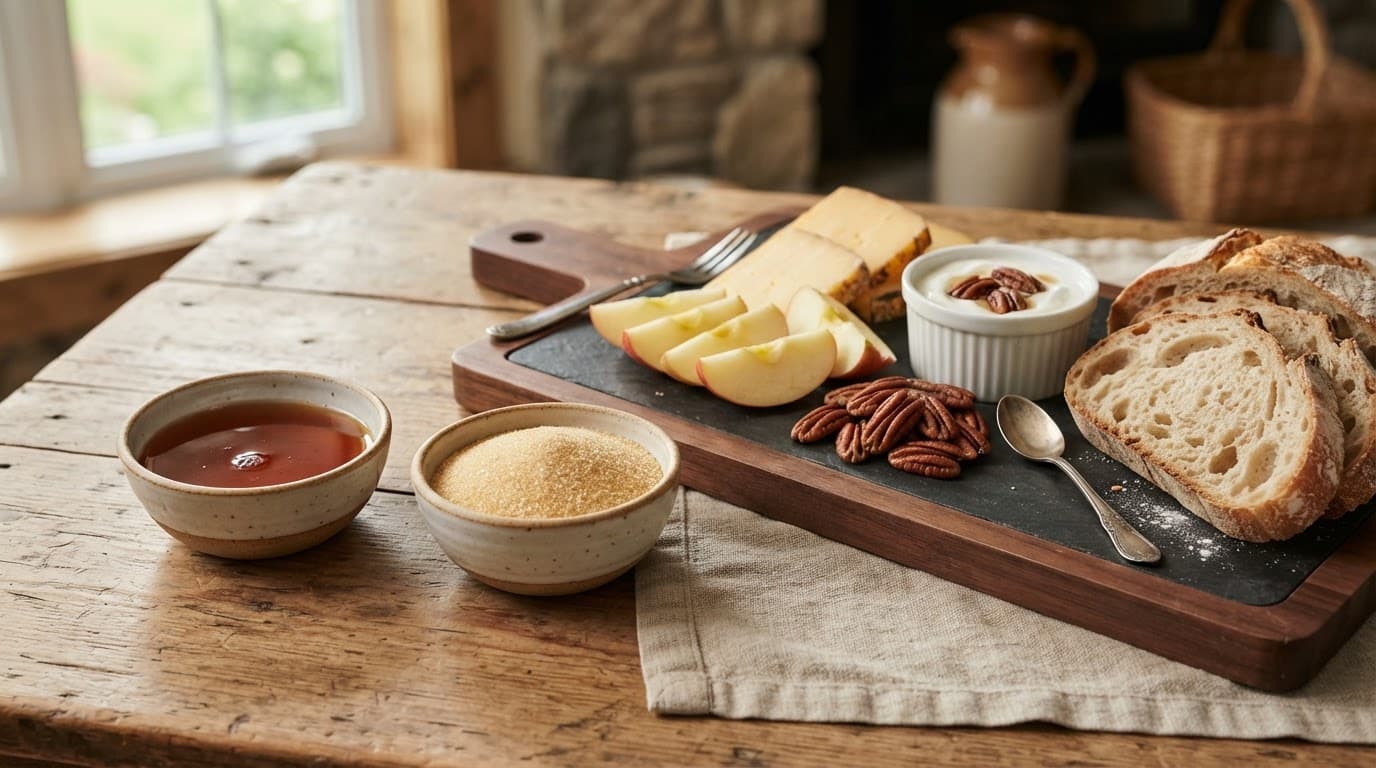
Create a simple maple tasting plate for two people with the following ingredients:
- 2 tablespoons pure maple syrup
- 2 tablespoons maple sugar
- 4 ounces aged cheddar
- 4 ounces plain Greek-style yogurt
- 1 sliced apple
- 1 cup toasted pecans
- 4 small slices sourdough
Serve maple syrup with yogurt, apple slices, and sourdough. Its liquid texture absorbs into each bite.
Sprinkle maple sugar over yogurt, or serve it beside aged cheddar and pecans. Its dry crystals create a crisp contrast with creamy and savory foods.
Where Maplelixir Adds a Premium Maple Finish
Maplelixir is a premium maple-inspired bee product made with maple-fed bees and hand-harvested in small batches in Québec.
Serve a small spoonful over Greek-style yogurt, sourdough, aged cheese, roasted fruit, or desserts. Its smooth texture and distinct maple character can add an elegant finishing touch to a tasting plate.
To learn more about the product story, read how Maplelixir reimagines maple through bees.
A Simple Method for Comparing Maple Sugar and Syrup
A side-by-side tasting helps you understand how each product behaves with food.
- Place 1 tablespoon maple syrup in one small dish.
- Place 1 tablespoon maple sugar in a second small dish.
- Taste one-eighth teaspoon of each product plain.
- Wait 30 seconds between samples.
- Taste 1 teaspoon of each with the same food, such as apple, sourdough, or cheddar.
- Record what you notice before moving to the next pairing.
Detailed Maple Tasting Steps With Exact Figures
Rate each product from 1 to 5 in these categories:
- Aroma
- Sweetness
- Texture
- Maple intensity
- Finish
Maple sugar may taste stronger at first because it is dry and concentrated. Maple syrup may leave a longer aroma because it coats the palate.
Serve dairy and sliced fruit promptly. Refrigerate leftovers according to the food package directions.
Maple sugar often gives a quick, concentrated maple note. Maple syrup usually creates a smoother and more aromatic finish.
Upgrades That Make Maple Recipes More Special
Maple flavors work best when balanced with a small amount of salt, spice, fat, or acidity.
Try one or two of these additions:
- Cinnamon
- Fresh ginger
- Orange zest
- Espresso
- Flaky salt
- Black pepper
- Toasted pecans
- Aged cheese
Use maple syrup in glazes and dressings. Use maple sugar in crusts, dry mixes, and toppings.
Maple Glaze for Roasted Foods
Makes 4 servings
Ingredients
- 2 tablespoons pure maple syrup
- 1 teaspoon Dijon mustard
- 1 teaspoon apple cider vinegar
- 1 teaspoon olive oil
- 1/8 teaspoon kosher salt
- 1 pound roasted carrots, squash, or salmon
Instructions
- Whisk the maple syrup, Dijon mustard, vinegar, olive oil, and salt in a small bowl.
- Roast the carrots, squash, or salmon until almost done.
- Brush the glaze over the food during the final 5 minutes of cooking.
- Serve warm.
Adding the glaze near the end helps reduce burning and keeps the maple aroma noticeable.
Approximate nutrition per serving: 37 calories, 6.8 g carbohydrates, and 6.1 g total sugars.
More Ideas and a Bonus Maple Sugar Rim
Use maple sugar in:
- Shortbread
- Granola
- Popcorn seasoning
- Crème brûlée topping
- Spice rubs
- Cookie toppings
Use maple syrup in:
- Coffee
- Vinaigrettes
- Baked beans
- Cocktails
- Roasted fruit
- Whipped cream
Bonus maple sugar rim for two glasses:
Moisten the rims of two glasses with a citrus wedge. Dip each rim into 2 tablespoons maple sugar. Use with a cocktail, sparkling water, or apple cider.
Nutrition Information: What the Numbers Can and Cannot Tell You
Maple syrup and maple sugar are both added sweeteners. Nutrition values vary by brand, recipe, and serving size.
The table below provides general estimates. Check the package label for the most accurate product-specific information. You can also review entries through USDA FoodData Central.
| Nutrient | Maple Syrup, 1 Tbsp | Maple Sugar, 1 Tbsp |
|---|---|---|
| Calories | 52 | 48 |
| Carbohydrates | 13.4 g | 12 g |
| Total sugars | 12.1 g | 12 g |
For a broader ingredient comparison, read is maple syrup better than sugar?. It explores serving size, ingredients, and practical ways to choose a sweetener for a recipe.
How Serving Size Changes the Comparison
A tablespoon of maple sugar weighs differently from a tablespoon of maple syrup. This can make volume-based comparisons misleading.
When baking or developing recipes, weigh ingredients for more consistent results. The other ingredients in the recipe also affect the final nutrition estimate.
You can also compare maple with another fruit-based sweetener in this guide to date syrup vs maple syrup.
How to Think About Maple Syrup in Everyday Recipes
When reviewing maple syrup nutrition facts, remember that pure maple syrup is made from the sap of maple trees, but it is still a concentrated sweetener. It can be a flavorful natural sweetener, yet it is also high in sugar.
Like other natural sweeteners, maple syrup contains sugars that count toward the overall added sugars in a recipe when used in coffee, baking, sauces, drinks, or desserts. A small drizzle may be enough to add aroma and flavor. In many recipes, it is practical to use less of it and build depth with cinnamon, citrus zest, vanilla, salt, toasted nuts, or spices.
Maple Syrup, Honey, and Other Sweeteners
Maple syrup and honey both offer distinct flavors, but neither should be treated as a low-sugar ingredient. Both are high in sugar, and both can increase the sweetness of a recipe quickly.
Compared with table sugar, maple syrup also adds liquid. This can make it a useful choice for glazes, dressings, marinades, and soft baked goods. Still, whether it is a healthier alternative or a better choice depends on serving size, the rest of the recipe, and personal dietary needs.
Pure maple syrup contains small amounts of minerals, including potassium and manganese. Some nutrition labels may show a notable share of the daily value of manganese, although nutrient values can vary by serving and brand.
Blood Sugar and Serving Size
Maple syrup has a glycemic index that may be described as a lower glycemic index than some forms of refined sugar. However, this does not mean it will not spike blood sugar levels.
Portion size, the meal itself, and individual response all affect blood sugar levels. People monitoring blood sugar and insulin, managing insulin resistance, or living with metabolic syndrome should follow advice from a qualified healthcare professional.
Maple syrup is sometimes described as rich in antioxidants because it contains naturally occurring plant compounds. However, more research is needed before connecting normal maple syrup servings to outcomes related to gut health, heart disease, or cardiovascular disease.
Like other sources of added sugar, frequent sweet foods and drinks can contribute to dental problems when overall dietary habits and oral care are not considered. Enjoy maple syrup for its flavor and versatility, while keeping portions appropriate for your needs.
Common Mistakes and How to Fix Them
Mistake: Buying pancake syrup instead of pure maple syrup.
Fix: Read the ingredient list. Choose a product labeled 100% pure maple syrup when that is the flavor you want.
Mistake: Swapping maple sugar and maple syrup without adjustments.
Fix: Remember that syrup adds liquid. Use a tested recipe or adjust moisture carefully.
Mistake: Adding maple syrup too early over high heat.
Fix: Add syrup-based glazes near the end of cooking to reduce the chance of burning.
Mistake: Using too much maple sugar in a dry rub.
Fix: Start with a small amount. Taste the mixture before using it on food.
Another common mistake is assuming honey and maple syrup always work the same way. Learn more about using honey instead of maple syrup, including when the swap may affect moisture, flavor, and texture.
Storage Lessons for Better Flavor
Follow the storage instructions on each package.
Store maple sugar in a sealed container in a cool, dry place. Keep moisture out to prevent clumping.
Refrigerate opened maple syrup when the label directs. Always use clean utensils and inspect the product before serving.
Lessons Learned for Buying and Cooking With Premium Maple
Start with a small amount of maple, then build the flavor. Maple works especially well when balanced with salt, citrus, vinegar, spice, or savory ingredients.
Use this quick shopping checklist:
- Look for a short ingredient list.
- Choose 100% pure maple syrup or pure maple sugar.
- Consider whether you need liquid or dry sweetness.
- Select a lighter or darker syrup based on the dish.
- Buy a package size that fits how often you cook with maple.
- Protect maple sugar from moisture and maple syrup from heat after opening.
A Practical Decision Guide for Your Next Recipe
Choose maple syrup for liquid recipes, glossy finishes, sauces, and tender baked goods.
Choose maple sugar for dry mixtures, crisp toppings, spice blends, and concentrated maple flavor.
Use both when a dish needs moisture from syrup plus a final maple crunch.
Frequently Asked Questions
Is maple sugar healthier than maple syrup?
Neither maple sugar nor maple syrup should be treated as a health treatment. Serving size and the total amount used in a recipe matter more than the format.
For personal nutrition guidance, review the product label and speak with a qualified health professional.
Can maple sugar replace brown sugar in baking?
Sometimes, but not in every recipe. Maple sugar has less moisture than brown sugar and can change texture, spread, and browning.
Use a tested recipe conversion when possible. For more substitution ideas, see this guide to choosing a honey and maple syrup substitute for different recipes.
Is pancake syrup the same as maple syrup?
No. Pure maple syrup comes from concentrated maple sap. Pancake syrup is often a flavored sweetener made with other ingredients.
Check the ingredient label before buying.
How should opened maple syrup be stored?
Follow the producer’s label. Many pure maple syrups should be refrigerated after opening.
Use clean utensils and inspect the syrup for changes in smell, appearance, or texture before use.
What is Maplelixir, and how can it be served?
Maplelixir is a premium maple-inspired bee product from Québec. Serve it in small amounts with cheese, yogurt, fruit, sourdough, roasted fruit, or desserts.
Conclusion
Maple syrup and maple sugar come from the same starting point, but each has a different role in the kitchen.
Maple syrup adds moisture, shine, and pourable sweetness. Maple sugar brings concentrated flavor, dry texture, and a delicate crunch. Keep both on hand, then choose the form that best fits your recipe.
For a luxury maple-inspired finishing touch, recipe ideas, and product details, visit Maplelixir.
The nutritional information and potential health benefits mentioned in this post are for information and educational purposes only. The recipes listed have no purpose to treat, cure, or prevent any medical condition. Please consult a registered dietitian or health care provider for specific dietary or medical advice.